

Loss of Alcavis® and ExSept Plus® Create Patient Confusion

The somewhat mysterious decision (the website still says nothing) of Angelini Pharma to dissolve its U.S. infection control business unit in January of this year, eliminating production of ExSept Plus and Alcavais is still reverberating among dialysis patients in April.
Why Are These Products Gone?
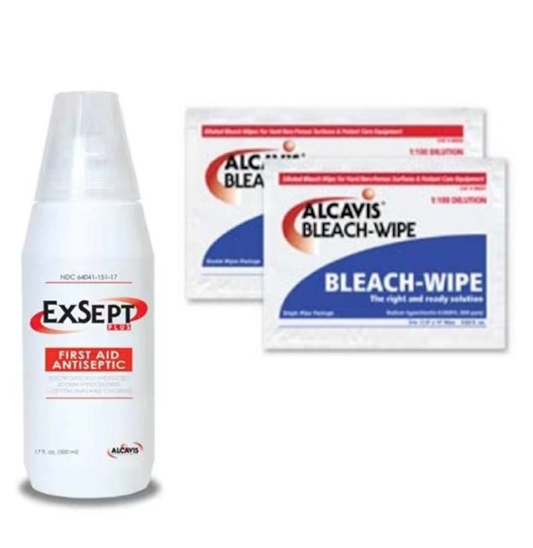
The main stated reason was a strategic shift to focus on other areas (such as brain health and consumer healthcare). But, I have to wonder if the Trump tariffs announced in late 2025 and early 2026 contributed to this choice. Regardless, the sudden loss of trusted infection control products has been and is still a challenge. According to the Internet—and we all know not to trust that implicitly—inventory of the high level, sodium hypochlorite-based disinfectant Alcavis 50 designed for dialysis catheters, has already been depleted. The antimicrobial skin and exit site wound cleanser ExSept Plus is likely to run out by next month.
Here is what some patients had to say about the disappearance of Alcavis:
“Discontinuing Alcavis feels like a handrail that is suddenly removed leaving us unsure how to proceed.”
“My clinic still has not decided what we are supposed to do instead.”
“I’m nervous about not being able to sterilize my catheter.”
“We still get Alcavis in our reorders. They haven’t said anything.”
“Our clinic told us this week and shared a letter from Vantive, announcing that Alcavis is being discontinued. No word yet on the replacement protocol.”
“I'm with _____. They did mention they were planning on cutting it out. Something about it breaking down the catheter. (Note: Not true). They didn't have any more information for me until it happens, they said. So, not sure how much longer I'll be using it.”
“I was told by my nurse that it was being discontinued because it was found to make no clear difference in fighting germs.” (Note: also not true).
“The company went bankrupt. (Again, not true). I ordered as much as I am allowed.”
“I was taught to use it every time I hook up.” (For PD).
“I use Alcavis to clean the transfer set as instructed by the dialysis team.”
“I was told the same, use Alcavis on the bag medication port and top of med vial. Alcavis is stronger than ExSept, which I use on my catheter and to clean skin around my exit site.”
Here are some patient reactions to the discontinuation of ExSept Plus:
“I was told that they are discontinuing it and to order as much as possible each time, to stock up on it, by my nurse, at the clinic.”
“I have been using ExSept on the exit site for cleaning the catheter itself. For 3 years I have done this. I use gentamycin cream on the exit site with the ExSept every day. But, I feel just lost without actually cleaning the catheter????”
“We use ExSept for cleaning the exit site and the transfer set. For the end of the transfer set we use mini caps with iodine/betadine in them.”
“Not real sure yet how we will handle things once the supply is depleted. Not happy about this. I’m a ___ patient ordering supplies from Baxter/Vantive.”
Replacement Options
Each clinic follows Clinical Practice Guidelines as well as Policies and Procedures documents, and these suggestions do not replace either. Patients, and in some cases nurses, have suggested the following.
| ExSept Plus Replacement Suggestions | Alcavis Replacement Suggestions |
|---|---|
| “I never used anything. I am masked, my hands are washed/rubbed with sanitizer, and I did not allow the uncapped tip to touch ANYTHING. That's it. Oh, and no one around. That's what I was taught by the clinic.” | “We did away with Alcavis 2 years ago. I was nervous at first but as long as all training is followed no issues not scrubbing the cath.” |
| “Alcohol pads and wipe around the exit site in a circular motion as close to the exit site as possible without trying to affect or pull on the catheter line. Use gentamycin around the exit site via a tip application before applying new gauze and tape.” | I do alcohol pad cleaning on the clamp of the transfer set where my hands and germs touch it. They do not recommend alcohol on the tubing, since it’s possible to degrade it over time. I use clean gauze to hold the tubing while handling and wipe with saline after.” |
| “Use an alcohol or betadine wipe to clean it.” | “No more Alcavis for us. We will be using Prevantics swabs.” (Note: 3.15% chlorhexidine gluconate and 70% isopropyl alcohol). |
| “Regular soap and water while showering usually keeps it cleaned. | “Our nurse at ____ said the new procedure will be to not do any soak and scrub. To clean the top of the heparin bottle, we are to use an alcohol wipe for one minute. She said alcohol will break down the transfer set if we use it as a soak. She thinks it’s crazy too. There will be a lot of infections once we all run out.” |
| “I was taught to clean the exit site with a 4x4 cotton pad with Dial antibacterial soap and then rinse with another pad with clean water. Over 2 years now and no problem.” | |
| “The catheter sits on your body all day. You sweat on it and get germs from your skin on it and now we are not going to clean it off. |
Take Aways
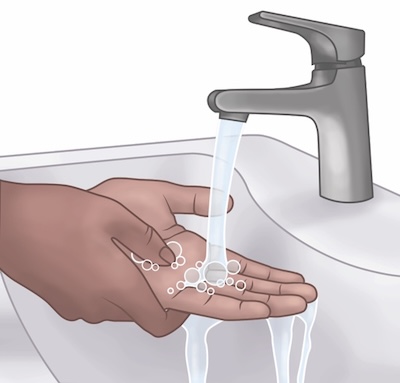
Home dialysis patients are trained to follow their instructions carefully to prevent infections. They care because a single episode could cost their modality, ability to get a transplant, and their lives. They are taught that each step of disinfection must be taken very seriously and they can never ever become complacent.
When patients train for PD, nurses watch carefully. Hand-washing is timed to ensure strict adherence, as are disinfection times and technique. Patients must repeat the steps over and over again until it is built into their muscle memory like a ritual.
So, it makes sense that some patients are not okay with the abrupt loss of a product and a major step in their disinfection process. It makes sense that changes like this can be deeply unsettling, especially to patients who listened when trained and have been meticulously following the instructions given. Patients who were accustomed to disinfecting their transfer sets are not going to feel safe (or clean) if they are suddenly...not.
Some are now being told to use nothing in replacement. Others are given something different. Some are seeking advice online about what to do and asking questions on social media to find out how clinics are handling this crisis. Some are hoarding supplies. Fear and uncertainty are sneaking into the home dialysis community as a result of this, and it's difficult to find clear answers for what will happen next.
It's important to know that these products were not recalled from the market because they were harming patients. They were discontinued due to a business decision. This "feels" different to patients than a safety concern would. They may feel that what they have been taught "never mattered." I wonder if-that makes patients consider if other disinfection protocols "don't really matter," either.
Personally, I would love to see some sort of a standardized approach for breaking news, whether it is about discontinuation of a product, introduction of a new one, a change in policy, etc. Perhaps just something along the lines of:
What is Happening?
Why it is Happening?
How will it Affect YOU?
Whom to Ask if You Have Questions?
Please write these at a 5th-6th grade level, though. Unfortunately, something an attorney drafts is unlikely to be understandable to many.
Comments
Keith Woods
Oct 14, 2026 9:41 AM
Michel
Sep 17, 2026 12:23 AM
Liver transplant 13 years ago, 4 of my 5 L vertebrae’s suffered a compression fracture and I have a couple of other stuff.
I spend quite a bit of money between a lot of specialists, 16 different medications etc…
Not a cry baby here but products like Alcavis are our life saver. Because I am already on immuno suppressant I literally slalom from one infection to the other.
Currently lingering peritonitis and some stuff that looks and feels like cellulitis which appeared a few days ago.
Would it be possible to have all patients with more than 2 conditions entitled to a special discount for a life saving product?
I know that ethics and business don’t go together well but please do for us what no one else is doing, no federal help, no state help, no county help, no city help.
We really are struggling, we are already sick and get pressed like lemons through all the expenses which, for a few of them, are life savings ones.
Where and when do we draw the line between pure madness and trying to stay alive?
What do you think? Love wins.
( it is written somewhere that helping the weak and the sick is a duty for believers of all kinds. Time to look at oneself in a mirror and tell all what you really, deeply see).
Best regards
Michel G
Lori Page
Sep 12, 2026 8:57 PM
Amarii Espinosa
Sep 16, 2026 1:49 PM
Courteney DiDomenico
Sep 19, 2026 6:52 PM
Fredric Eisenberg
Aug 02, 2026 3:48 AM
Doug Crompton
May 21, 2026 9:29 PM
https://www.atuloproducts.com/shop-atulo/p/medical-device-disinfectant
Paul Kelly, Tita Kelly
Jul 13, 2026 7:41 PM
I will be letting them know my feelings about not giving me a heads that's BS. Thanks
Courteney DiDomenico
May 08, 2026 9:44 AM
My name is Courteney DiDomenico and I'm the Co-Founder of Atúlo Products. When we saw Alcavis 50 being discontinued with no clear replacement, we partnered with a trusted U.S. compounder to develop a 1:1 formula replacement for Alcavis 50 with same 0.55% sodium hypochlorite, same compatibility with dialysis catheters, caps, connectors, and transfer sets, FDA registered, and made right here in the U.S.A.!
We know patients were trained to follow very specific disinfection protocols and that suddenly being told to use "nothing" — or improvise with products not designed for this application is genuinely unsettling. Dialysis patients deserve a proper, validated solution. We hope Atúlo can be part of that answer.
Happy to answer any questions here or please feel free to reach out to me direct at courteney@atuloproducts.com. You can also learn more by visiting out website at: https://www.atuloproducts.com/shop-atulo/p/medical-device-disinfectant 💙